
You can still encounter layers of settlement, trade and culture spanning millennia across Cyprus. This timeline traces major turning points with links to sources.
Early settlements and antiquity
From settled communities to Mediterranean city-kingdoms.
- 9th–5th millennia BCE
Early communities and Choirokoitia
Farming communities arrived in Cyprus around the early 9th millennium BCE. UNESCO-listed Choirokoitia, occupied from the 7th to 5th millennia BCE, preserves circular stone-and-mudbrick homes and evidence of organised Neolithic life.
View source - 2nd millennium BCE
Copper trade and Mediterranean connections
Cyprus became an important trading centre thanks to its copper resources and ports. Links with the Aegean strengthened in the Late Bronze Age, and Mycenaean-Achaean settlement influenced the island's language and culture.
View source - 1st millennium–30 BCE
City-kingdoms and the Hellenistic era
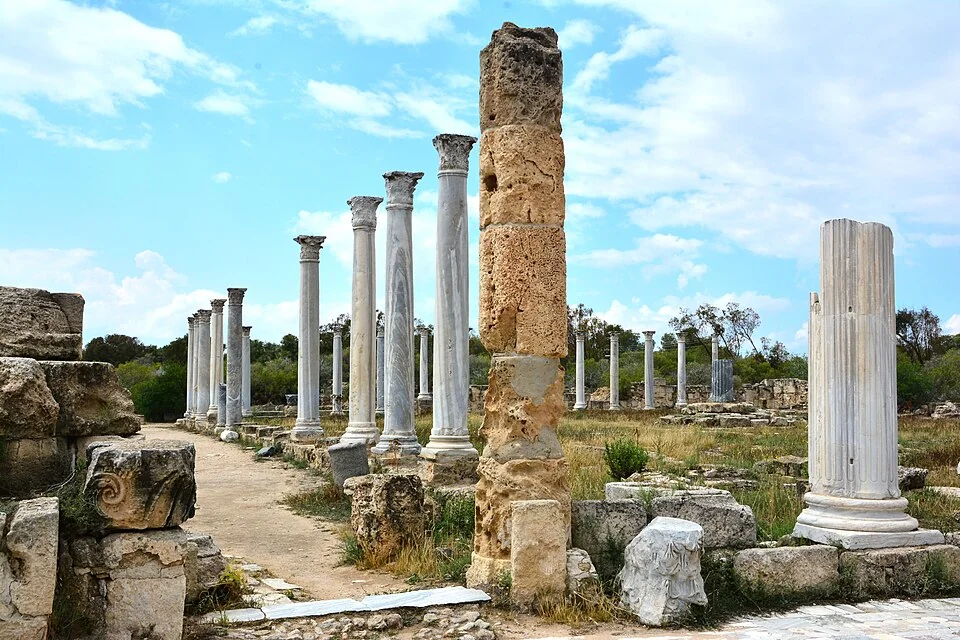
Cities such as Salamis, Kition and Paphos became centres of trade and political power. Phoenician communities were influential in Kition, while Assyrian, Egyptian and Persian rulers held sway at different times. The island later entered the Hellenistic world and Ptolemaic rule.
View source - 30 BCE–330 CE
Roman Cyprus and the spread of Christianity
Under Roman rule, ports, roads and towns developed. The mosaics at Paphos are outstanding reminders of the period. Christianity spread on the island during the early centuries CE and shaped its later cultural life.
View source
Medieval and imperial rule
Byzantine, Lusignan, Venetian and Ottoman legacies.
- 330–1191
Byzantine Cyprus
As part of the Eastern Roman/Byzantine world, Cyprus developed a rich tradition of churches and monasteries. From the 7th century onward, Arab raids and regional power shifts affected its security and administration.
View source - 1191–1489
Crusaders and the Lusignan kingdom
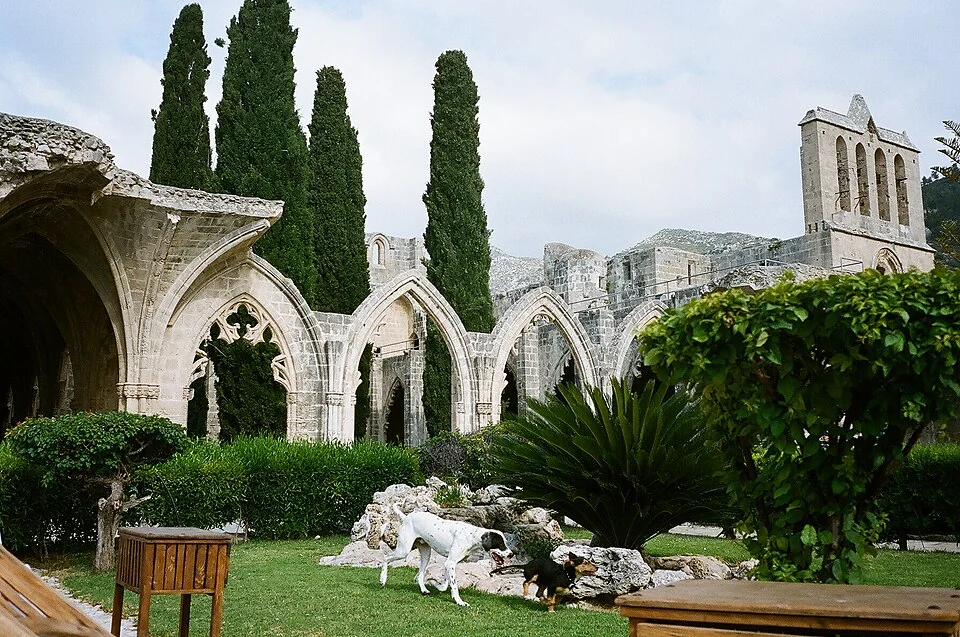
Richard the Lionheart took Cyprus in 1191. After a brief transition, the Lusignan dynasty established its kingdom. Gothic monuments at Bellapais and Famagusta remain visible legacies of medieval Cyprus.
View source - 1489–1571
Venetian rule
The Republic of Venice ruled the strategically placed island on Mediterranean trade routes. Fortifications at Nicosia and Famagusta reflect this period. Venetian rule ended with the Ottoman conquest in 1571.
View source - 1571–1878
Ottoman rule and a changing society
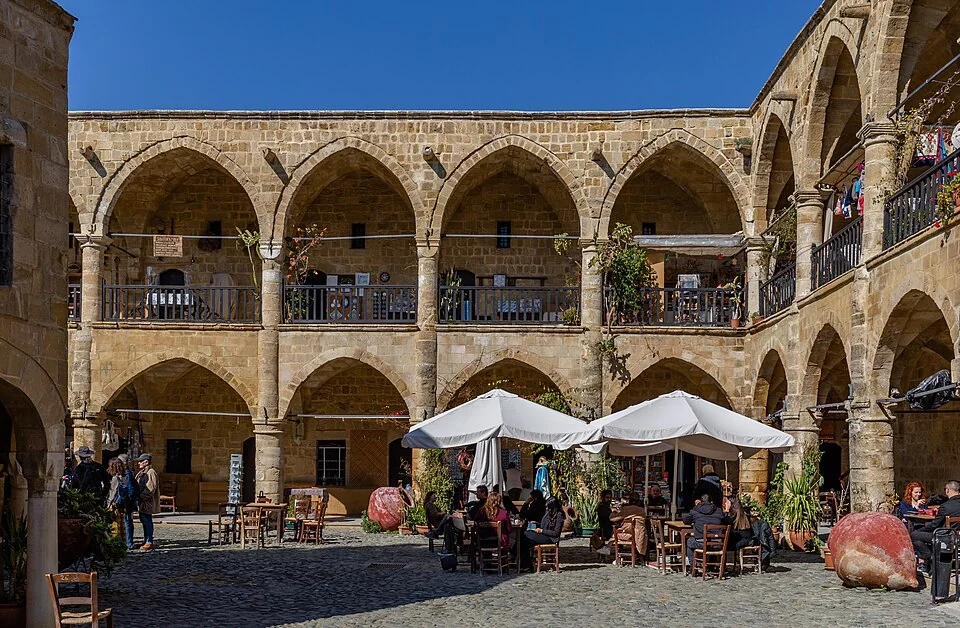
Cyprus spent roughly three centuries under Ottoman administration. Settlement from Anatolia and changes in religious and civic institutions helped shape the Turkish Cypriot community. Inns, mosques and charitable foundations remain part of the urban landscape.
View source
British administration and independence
From colonial administration to the Republic established in 1960.
- 1878–1925
Transition to British administration
Britain assumed administration of Cyprus in 1878, annexed the island in 1914 and declared it a Crown colony in 1925. The period reshaped administration, law, education and infrastructure.
View source - 1955–1959
Anti-colonial struggle and communal tension
EOKA began its armed campaign against British rule in 1955. Demands for union with Greece (enosis) and Turkish Cypriot security concerns shaped political conflict. Violence and negotiations were followed by the 1959 Zurich–London agreements laying the foundation for independence.
View source - 16 August 1960
The Republic of Cyprus becomes independent
The Republic of Cyprus gained independence. Its constitution provided for a power-sharing framework between Greek Cypriots and Turkish Cypriots, with Türkiye, Greece and the United Kingdom party to the guarantee arrangements.
View source
Conflict, division and the present
How unresolved issues continue to shape the island.
- 1963–1964
Intercommunal violence and UN peacekeeping
Following constitutional crises, intercommunal violence erupted in December 1963. In March 1964 the UN Security Council recommended establishing UNFICYP to help prevent renewed fighting and restore stability.
View source - July–August 1974
Coup, Turkish military intervention and de facto division
A coup backed by the Greek military junta and favouring union with Greece was followed by military intervention by Türkiye. Fighting and displacement led to a de facto division between north and south after the August 1974 ceasefire, separated by a UN-supervised buffer zone.
View source - 15 November 1983
Declaration of the Turkish Republic of Northern Cyprus
The Turkish Republic of Northern Cyprus (TRNC) was declared in the north and is recognised by Türkiye. UN Security Council Resolution 541 considered the declaration legally invalid and called on states not to recognise any Cypriot state other than the Republic of Cyprus.
View source - 23 April 2003
Crossing points reopen
After almost three decades, the first crossing points between the north and south reopened, allowing Greek Cypriots and Turkish Cypriots to reconnect with relatives and places across the island.
View source - 24 April–1 May 2004
Annan Plan referendums and EU accession
The UN's Annan Plan was put to separate referendums: a majority of Turkish Cypriots voted in favour and a majority of Greek Cypriots voted against, so the plan did not take effect. The Republic of Cyprus joined the EU on 1 May. EU law remains suspended in areas outside its government's effective control.
View source - 2004–present
Continuing talks and a shared heritage
UN-facilitated talks have not yet delivered a comprehensive political settlement. The island continues to carry different communal experiences and a shared historical heritage. Crossing, property and administrative arrangements can change, so verify current procedures with the relevant authorities.
View source
Discover historic places
Sources and further reading
Sources reviewed on 13 November 2026. Period boundaries and archaeological dates may be approximate.
- UNESCO — Choirokoitia Neolithic settlement
- Cyprus history — overview and chronology
- Kato Paphos archaeological park — Roman heritage
- TRNC Ministry of Foreign Affairs — historical perspective
- UN UNFICYP — independence and constitutional history
- UN UNFICYP — mandate and background
- UN UNFICYP — 1974 and the buffer zone
- UN Security Council — Resolution 541 (1983)
- UN UNFICYP — crossings and peace process
- European Union — Cyprus membership and EU law